In-depth article about PMSG in the TAZ
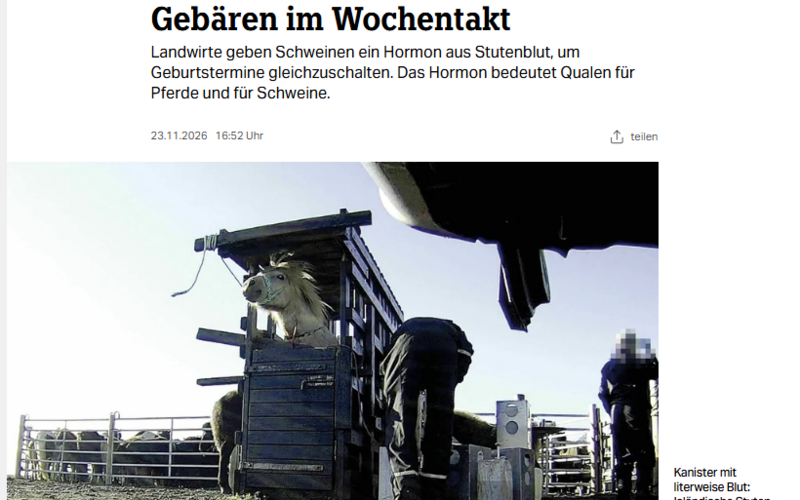
The German newspaper TAZ has published an in-depth investigative report on the "torture hormone" PMSG. The article shows how industrial pig farming in Germany benefits from this hormone, taken from mares' blood, and focuses on the ethical and animal welfare implications of this system.
The article addresses the use of the fertility hormone PMSG/eCG in pig breeding. The hormone is derived from the blood of pregnant mares, from which large quantities of blood are regularly drawn at so-called “blood farms” in countries such as Iceland, Argentina, and Uruguay. We have been monitoring this industry for years and have repeatedly reported on significant animal welfare issues at these so-called blood farms.
In pig farming, the hormone is used to synchronize the fertility of sows. This allows many animals to be inseminated at the same time and to give birth to their piglets simultaneously. For large operations, this simplifies planning, reduces costs, and enables the production of large groups of piglets of the same age.
Critics refer to this as “double animal cruelty”: On the one hand, the mares suffer during blood collection; on the other hand, the hormone is used primarily for economic purposes in pigs rather than to treat diseases. Furthermore, its use can lead to larger litters, resulting in the birth of more weak or underweight piglets, known as "runts".
The article notes that alternatives to PMSG already exist. Scientific studies show that pig breeding is possible even without the hormone derived from mares' blood. Nevertheless, the German federal government currently has no plans to ban the import or use of the active ingredient, as is evident from a recently published response to a parliamentary question tabled by the Greens.
Read the full article here. (in German)
