Animal Transport Amid Border Chaos
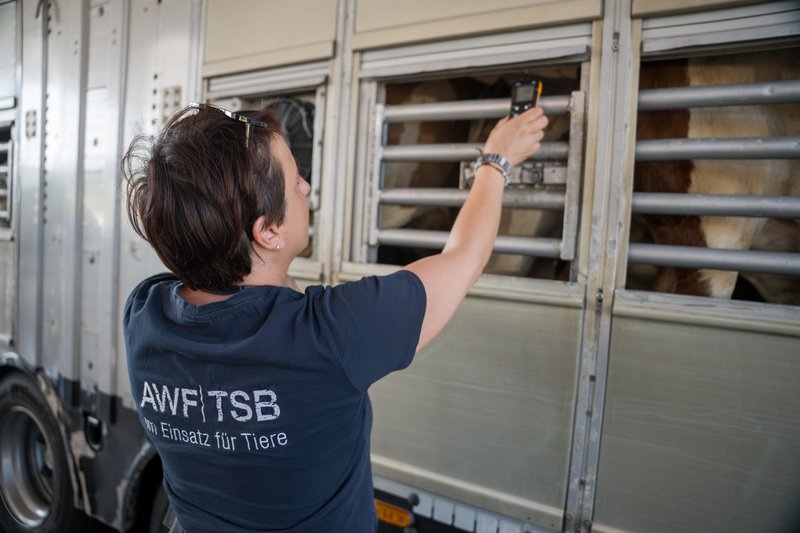
Project manager and veterinarian Tea Dronjić measures the temperature inside a cattle transport truck. The EU still allows temperatures up to 35 degrees. Anything above that violates the regulations.
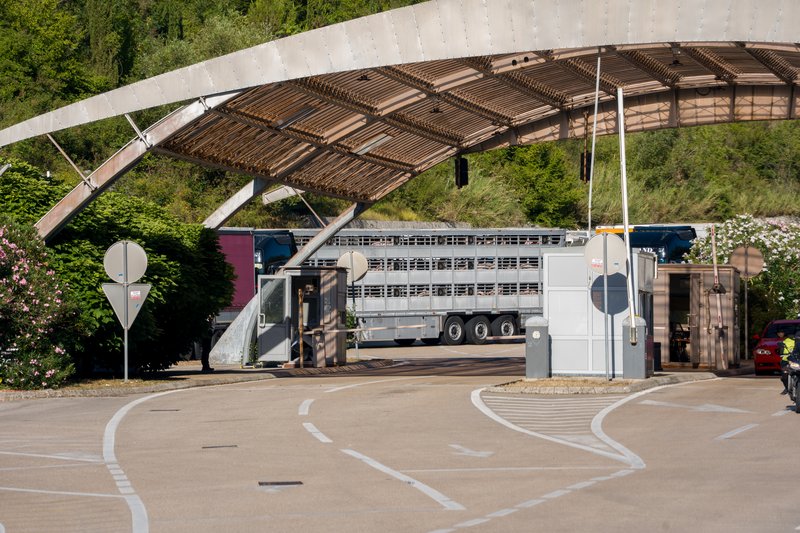
Customs in Montenegro: The border crossing is so small that livestock transporters and other trucks are not separated from the passenger car lane until just before the entrance.
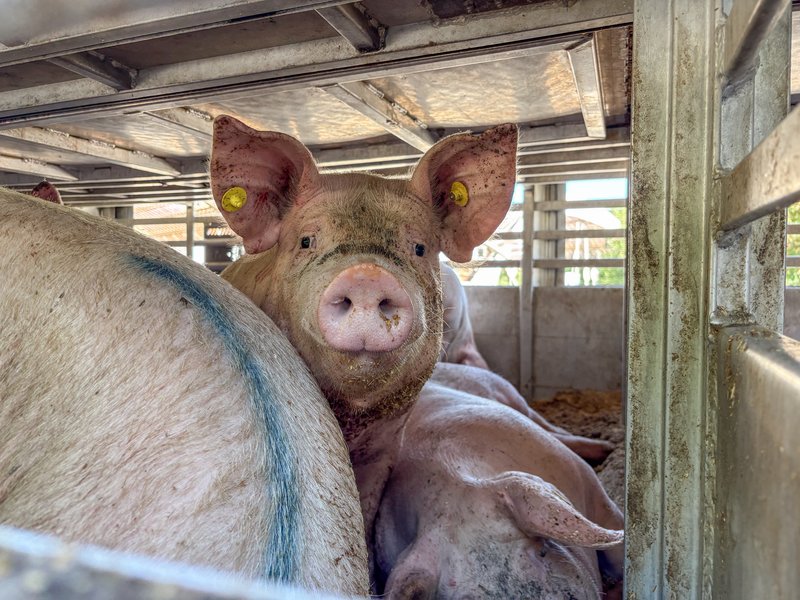
Pigs are also frequently exported across this border. Up to 65 livestock transporters leave the EU from here every week, bound for third countries.
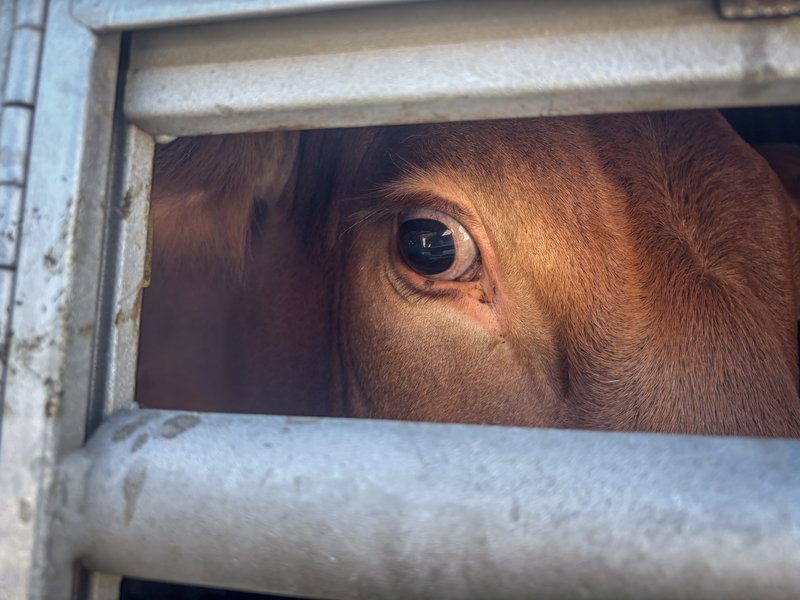
Trapped in the truck—in the midst of the border chaos. While traffic grinds to a halt outside, the animals wait inside. It’s hot, and there’s no shade.
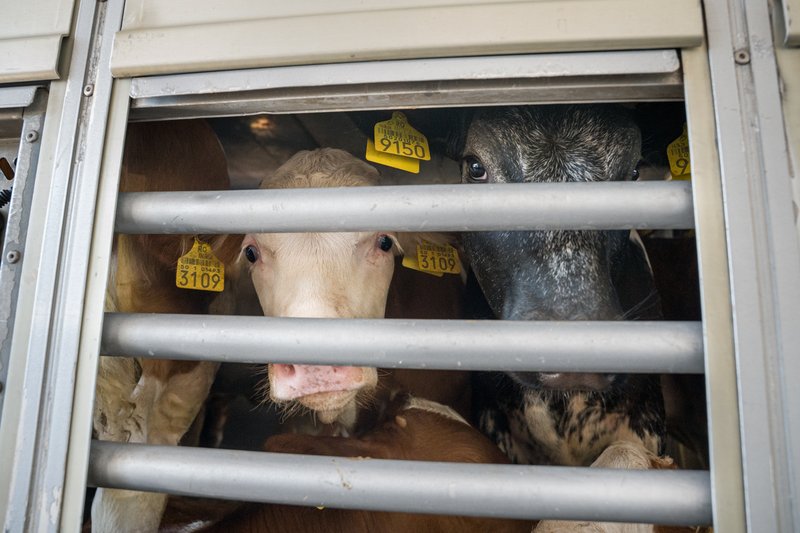
The cattle don't understand why they've had to stand in this cramped vehicle for hours. They look at our project manager warily.
Long traffic jams, inadequate inspections, and a lack of emergency infrastructure: Our investigation at the Croatian-Montenegrin border reveals serious shortcomings in the export of live animals from the EU. We ask for a transport ban across this border.
Conditions for animal transport at the Karasovići–Debeli Brijeg border crossing between Croatia and Montenegro are poor: Traffic jams often stretch for kilometers before the border, there are no shaded areas anywhere, and in an emergency, animals cannot be unloaded at the border crossing. On top of that, inspections at the border crossing are inadequate. Nevertheless, week after week, animal transport vehicles leave the EU there on their way to third countries.
We first became aware of this border crossing through a driver who reported chaotic conditions there. In July, our teams worked with partners on both sides of the border to verify whether the situation there was truly as chaotic as he had described. Over a period of about 10 days, our team inspected 40 livestock transporters there and documented the conditions for the animals, waiting times, temperatures, infrastructure, and veterinary inspections.
27 young bulls at 34.2 degrees
Here’s an example of what we saw there: It’s noon, and the sun is beating down on the asphalt when a dark truck pulls into one of the few parking spots at the border. It has to park there while the official veterinarians check its papers. Inside, 27 young bulls are crammed together. The transport truck comes from Slovenia; the animals’ ear tags indicate they originated in Hungary and Ireland. By this point, the animals have already been in transit for many hours.
Some of the cattle are lying on the bare metal floor; there is hardly any bedding. The thermometer reads 34.2 degrees. Although temperatures up to 35 degrees may still fall within the applicable guidelines under certain conditions, the stress on the animals is clearly visible. The driver states that he is on his way to Kosovo. After receiving his documents back from customs, he continues his journey.
50 to 65 livestock transports per week
The truck described is one of many that cross this border every week. The border crossing between Croatia and Montenegro has become a major route for the transport of live animals. Every week, between 50 and 65 livestock trucks cross the border on their way to countries such as Kosovo, Albania, or Montenegro.
Yet the infrastructure there is not at all designed to handle such a high volume of livestock transporters: The road to the border crossing is narrow and single-lane. Livestock transporters are stuck in traffic alongside cars, tour buses, RVs, and motorcycles. There is no dedicated lane or priority for transports carrying live animals. During the assignment, the lines stretched up to three kilometers. According to local media, they were at times as long as 20 kilometers in the summer.
Waiting in the heat
Waiting times are particularly problematic in high temperatures. When a pig transport truck arrives at customs on its way to Albania, the temperature is measured at 39 degrees. There are no shaded areas for the trucks at the border. “At such temperatures, countries should no longer authorize the export of live animals,” says veterinarian and project manager Tea Dronjić.
We also consider the veterinary inspections to be inadequate. On the Croatian side, a government veterinarian is responsible for inspecting outgoing animal transports as well as imports of animal products. During our mission, we did not once observe the veterinarian on duty leaving his office to inspect the animals in the transport vehicles.
Seven hours waiting time in the truck
The situation is just as problematic at night. Our team documented how a truck carrying pigs en route to Albania arrived at the parking lot shortly after midnight. However, since the Croatian border crossing for trucks closes at 7:00 p.m., the truck could not continue its journey and had to wait until the next morning.
Due to this poor planning on the part of the transport company, the animals had to remain in the truck for more than seven hours. Throughout the entire wait, the pigs were visibly agitated and repeatedly squealed. There is no way to unload them and house them under suitable conditions on site.
No Plan B for emergencies
This lack of emergency infrastructure is particularly critical. There is no barn at the border crossing and no suitable way to unload animals from the transporters in the event of prolonged delays or problems.
Transportats that are not permitted to enter Montenegro cannot simply return to the EU. European legislation does not provide for the return of live animals to the EU in such situations.
This creates a significant risk: If entry is denied at the border or if the journey is interrupted for an extended period, the animals may have to remain in the transport vehicle. A case like the one in Turkey two years ago, in which 69 pregnant cows from Germany died in agony after being denied entry, illustrates the consequences such a situation can have.
At the Karasovići–Debeli Brijeg border crossing, a key prerequisite for the safe transport of live animals is therefore missing: a functioning emergency plan with suitable facilities where animals can be housed if necessary.
New Route, familiar problems
Project manager and veterinarian Tea Dronjić also followed several vehicles to their destinations during the mission, including a truck carrying young bulls that was traveling to Kosovo via a winding, single-lane mountain road. Upon arrival, the slaughterhouse owner reported that the transport route through Serbia—which was frequently used in the past—was shorter and less stressful for the animals than the winding route through Montenegro. However, due to political tensions, the route across the Croatian-Montenegrin border has gained importance in recent years.
This highlights a problem we repeatedly observe when monitoring animal transports: When individual routes are closed or subject to stricter controls, transports often shift to other routes. This is particularly frustrating for us, as we have been campaigning for years to end these cruel animal exports to third countries.
Complaints and political consequence
The conditions documented at the Croatian-Montenegrin border therefore raise fundamental questions about the export of live animals from the EU. Long wait times, high temperatures, a lack of infrastructure, and insufficient monitoring capabilities all converge here. We believe it is unacceptable for live animals to be exported via such an unsuitable border crossing.
We are now compiling the findings from this mission and submitting our report and the evidence to the European Commission. Our demand is clear: The Karašovići–Debeli Brijeg border crossing must be closed to the export of live animals from the EU. A border crossing that is inadequately equipped to handle long wait times, high temperatures, and emergencies does not provide reliable conditions for the protection of transported animals.
At the same time, our investigation shows why inspections along transport routes remain necessary. This is because as soon as a livestock truck leaves the EU, monitoring the rest of its journey becomes significantly more difficult. While European animal welfare regulations generally apply all the way to the destination, the actual conditions on the roads outside the EU are difficult to monitor
Documented Problems at the Border
No priority lane for livestock transport: The road to the border crossing is a single lane. Livestock transporters are stuck in traffic alongside cars, buses, and other vehicles.
Lack of Infrastructure: There are no shaded areas, watering stations, or rest areas for waiting livestock transporters.
No emergency facilities: There is no emergency shelter and no suitable facility where animals could be unloaded in the event of prolonged delays.
Inadequate inspections: On the Croatian side, a single official veterinarian is responsible for both outgoing animal transports and the inspection of imported animal products.
Limited opening hours: Livestock transport vehicles regularly arrive at the border crossing outside of veterinary office hours and must wait until the next morning.
Long wait times: During the investigation, lines of up to three kilometers were observed. According to local media, the traffic jams were at times significantly longer during the summer.
High temperatures: During the investigation, temperatures of up to 39 degrees Celsius were recorded in the surrounding area.