Live Exports by Sea


Tens of millions of animals transported on an ageing and high-risk fleet
Every year, more than three million animals – mainly cattle and sheep – are exported from the European Union to non-EU countries by sea. They are first transported by road from farms and collection centres across Europe to export ports in countries such as Romania, Spain, Croatia, Portugal, Slovenia, France and Ireland. From there, livestock vessels carry them to destinations in the Middle East, North Africa and beyond.
These journeys can last for days or weeks. Animals are exported for breeding, fattening or slaughter to countries including Israel, Türkiye, Algeria, Libya, Lebanon, Jordan, Saudi Arabia and Morocco. Some consignments are even sent to regions affected by armed conflict and political instability.
Our objective is clear: to end live animal exports by sea from the European Union.
The global livestock fleet: key facts
Our 2026 report, The Global Livestock Fleet, produced together with Robin des Bois and Tierschutzbund Zürich, analyses 159 livestock carriers operating worldwide. It identifies systemic risks affecting animals, crews, maritime safety and the environment.
159 | livestock carriers worldwide |
40 years | average vessel age |
84% | converted from cargo and other commercial ships |
70% | operating under black- or grey-listed flags |
59% | supervised by non-IACS classification societies |
565 | known detentions during their operational lives |
6 consecutive years | as the worst-performing ship category in Paris MoU inspections |
Only 16% of the global fleet was purpose-built to transport animals. The remaining 84% consists of former cargo ships, container ships, vehicle carriers, Ro-Ro ships, reefers and other vessels later converted into livestock carriers.

A fleet built for cargo, not animals
Converted vessels were not originally designed to carry thousands of living, moving animals. Additional livestock decks may affect a vessel’s weight distribution, centre of gravity, stability, ventilation and fire safety.
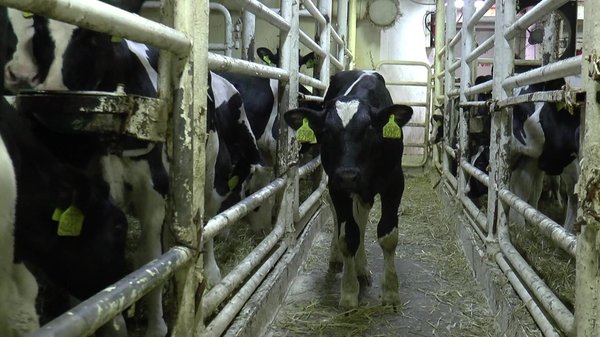
Animals may be confined in narrow pens, on steep ramps or beneath low ceilings. Poor airflow allows heat, humidity and ammonia to accumulate, while artificial lighting, machinery noise, vibration and vessel movement create an unfamiliar and stressful environment.
Many vessels are more than 50 years old. Despite the risks associated with conversion, old commercial ships continue to be converted because this is faster and cheaper than constructing purpose-built livestock carriers.
The worst-performing ship category
Livestock carriers have been the worst-performing ship category in Paris Memorandum of Understanding inspections for six consecutive years.
In 2024, deficiencies were identified in 88% of livestock-carrier inspections. Their detention rate was approximately 15%, compared with around 4% for all inspected ships.
The 159 vessels analysed in our report accumulated 565 known detentions during their operational lives. Frequent deficiencies involved:
- certificates and documentation;
- navigation and fire safety;
- structural condition;
- life-saving equipment;
- machinery and pollution-prevention systems;
- crew accommodation and working conditions.
This poor performance is especially alarming because the animals’ survival and welfare depend on the vessel’s ventilation, stability, machinery, feeding and water systems functioning throughout the journey.

Animal welfare at sea
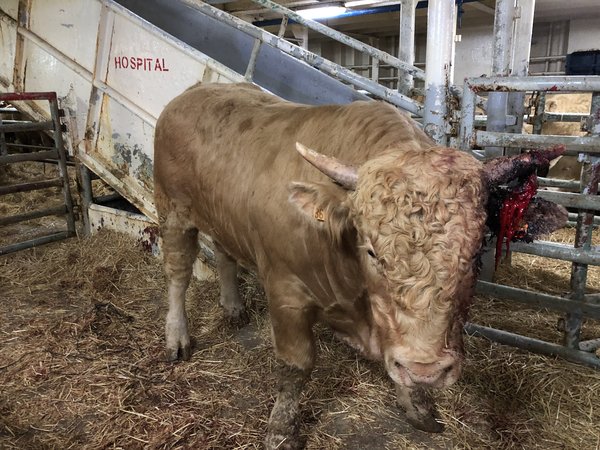
Sea transport exposes animals to serious risks that cannot be fully prevented or controlled. Cattle, sheep and other animals may spend days or weeks in an unstable environment, exposed to:
- heat stress and dehydration;
- overcrowding and insufficient space;
- high humidity and ammonia concentrations;
- vessel movement, noise and vibration;
- injuries caused by pens, ramps and other infrastructure;
- exhaustion, respiratory disease and digestive disorders;
- inadequate access to suitable feed and water;
- falls, trampling and mounting behaviour;
- births, miscarriages and the death of newborn animals;
- delays caused by bad weather, technical failures or import disputes.
High temperatures are among the most serious risks. Livestock vessels may travel from Europe to regions where temperatures and humidity are far higher, while many ships cannot adequately protect all animals from dangerous conditions.
Despite these risks, an official veterinarian is not required to accompany the animals throughout the sea journey. Once a vessel departs, reliable information about the animals’ condition, injuries, illnesses and deaths is extremely limited.
EU law applies until the animals reach their final destination. In practice, however, EU authorities have no effective system for routinely inspecting animals during the voyage or verifying their condition after arrival. Member States often receive no reliable information from vessel operators, captains, transporters or importing countries.
Animals may then face further road transport, inadequate veterinary care, rough handling and slaughter practices that would not be accepted in the European Union.
What we are doing
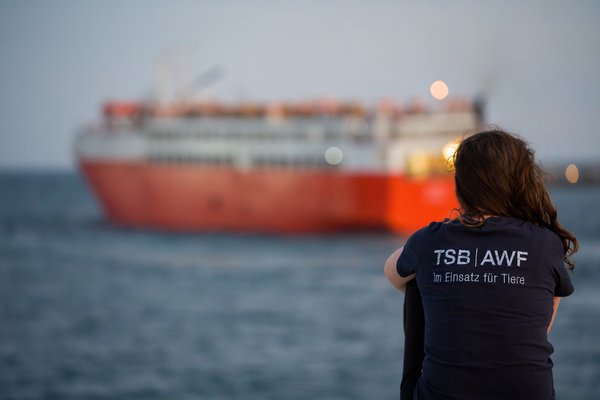
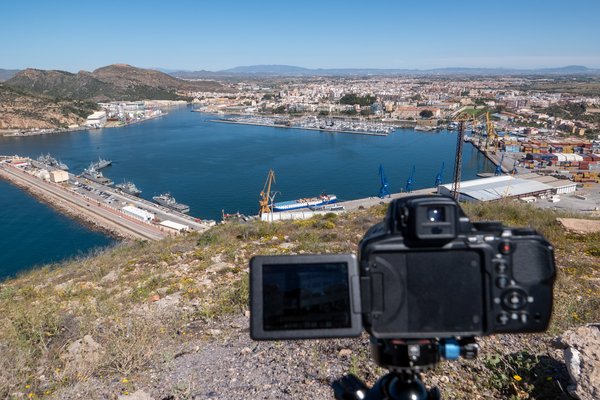
Animal Welfare Foundation and Tierschutzbund Zürich have investigated live animal transport by sea since 2014. Our teams have documented 70 livestock vessels during 175 journeys, loading operations or stopovers, monitored major EU export ports, followed consignments to destination countries and collected evidence from ports, farms, vessels and unloading operations.
Our work combines:
- investigations and documentation in exporting and importing countries;
- continuous monitoring of vessels and voyages;
- analysis of routes, journey durations, waiting periods and AIS irregularities;
- technical research into vessel safety and suitability;
- legal complaints and follow-up with national and EU authorities;
- cooperation with veterinarians, maritime experts, journalists and NGOs;
- media investigations and public-awareness campaigns;
- advocacy addressing animal welfare, maritime safety and environmental law.
Live animal transport by sea is not only a European problem. Tens of millions of animals are transported across the world’s oceans every year. Livestock carriers operate wherever animals are available for export. The same ageing vessels and operators may move between regions, while ship names, flags, owners and operating companies frequently change. This makes the trade difficult to monitor and responsibility difficult to establish.
For this reason, cooperation at both European and international level is essential. Together with our umbrella organisation, Eurogroup for Animals, we advocate for stronger EU animal transport legislation and coordinate political action with organisations across Europe.
We are also part of the Stop Live Exports global network. We believe that ending live exports is an international fight and that organisations must work together to stop these transports once and for all. Through the network, we coordinate investigations, share evidence, publish joint media releases and develop campaigns with partners in exporting, transit and destination countries.
By combining expertise, maintaining international visibility and building sustained political and public pressure, we aim to end this trade globally. Our evidence and collaborative work have already contributed to official inspections, political debates, legal complaints, technical reports and extensive international media coverage.
How you can get involved
Support our teams with your donation:
Donate kilometres for our investigations
Stay informed about our work:
Sign up for our newsletter
Further Information
Fact Sheet:
Long-distance transports
Fact Sheet:
Exports of Farmed Animals to Third Countries
Dossier:
Animal Welfare Overboard
Resolution of the European Parliament:
Protection of animals during transport within and outside the EU
Regulation on animal transports:
Council Regulation (EC) No 1/2005 on the protection of animals during transport
Study 2024: AWF x Robin des Bois
64 EU-approved livestock carriers
Study (Robin des Bois, AWF|TSB):
78 EU-approved livestock carriers
Study commissioned by the ANIT Commitee:
Animal welfare on sea vessels and criteria for approval of livestock authorisation
More on the topic
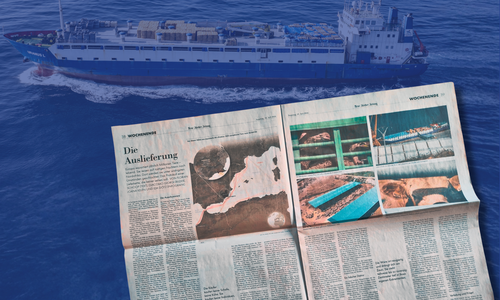
“Neue Zürcher Zeitung” Reports on Animal Exports from the EU by Sea
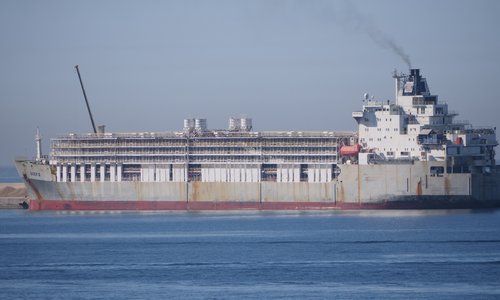
Media Coverage of the Livestock Carrier Fleet Report 2026

Press Release: Romania Is Not a Reliable Partner for the Resumption of Live Animal Exports - Investigation from May Reveals Major Violation of Animal Identification Rules and Welfare Problems

AWF Contributes Practical Experience to the EU Platform for Animal Welfare

New Report Highlights Systemic Risks in the Global Livestock Transport Fleet

New Report Reveals Alarming Conditions in the Global Livestock Carrier Fleet

Press Reports on the Court Hearing in the “Spiridon II” Case

Press Release: 50,000 Signatures Against Animal Transport to War Zones Submitted to the EU Commission
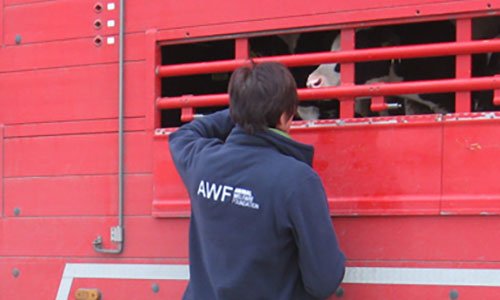
Read all investigation reports
Press Release: Romania Is Not a Reliable Partner for the Resumption of Live Animal Exports - Investigation from May Reveals Major Violation of Animal Identification Rules and Welfare Problems
AWF Contributes Practical Experience to the EU Platform for Animal Welfare
Read all investigation reports
“Neue Zürcher Zeitung” Reports on Animal Exports from the EU by Sea
Media Coverage of the Livestock Carrier Fleet Report 2026
Press Release: Romania Is Not a Reliable Partner for the Resumption of Live Animal Exports - Investigation from May Reveals Major Violation of Animal Identification Rules and Welfare Problems
AWF Contributes Practical Experience to the EU Platform for Animal Welfare
New Report Highlights Systemic Risks in the Global Livestock Transport Fleet