Uruguay | Canelones | Slaughterhouse Clay | Horsemeat import
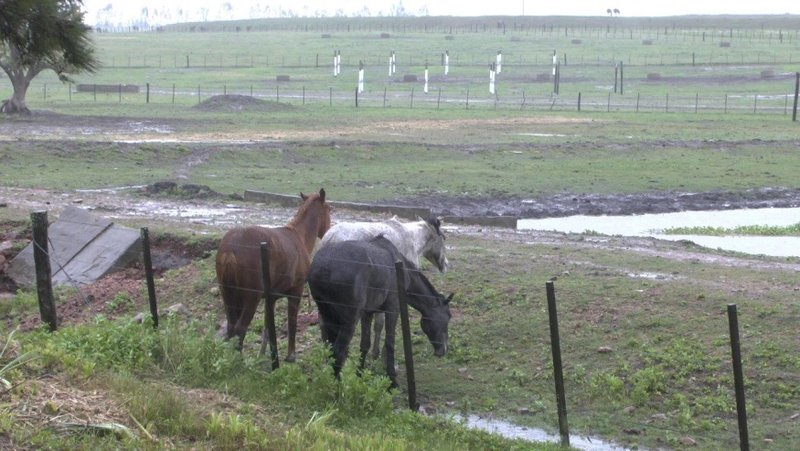
Kein Schutz vor Regen und Wind beim Schlachthof Clay.
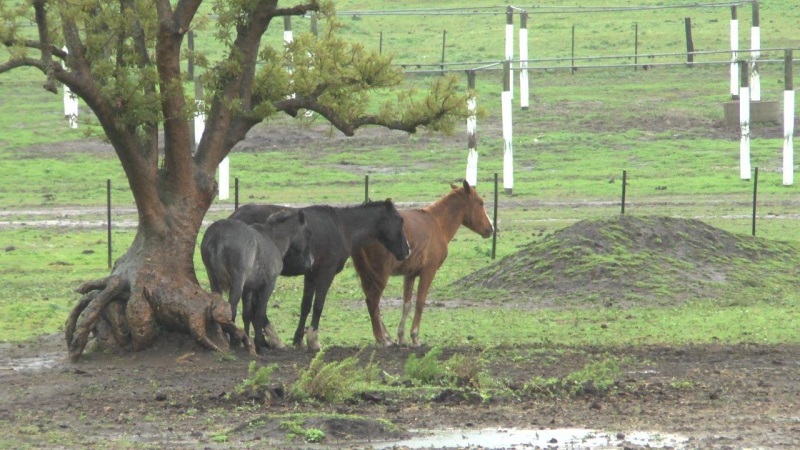
Pferde im Windschatten des einzigen Baumes. Dahinter kaputte Unterstände ohne Stoffdächer.
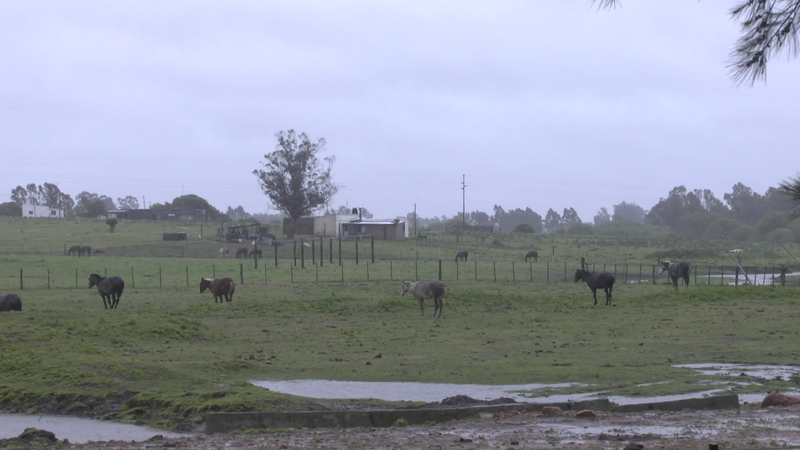
Die Pferde sind dem Sturm ausgesetzt und zeigen typische Schutzstellung. Vorne: grosse Pfützen.
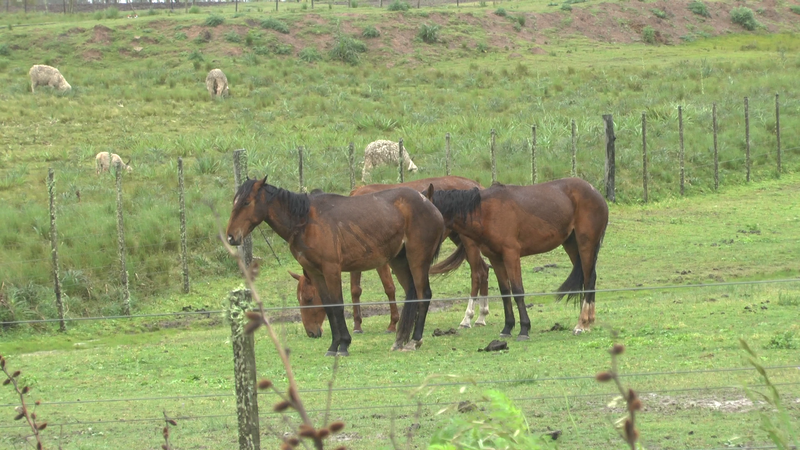
Hinten: Fuchs mit stark geschwollenem Karpalgelenk.
It is a stormy day with heavy rain and strong wind. When we arrive at the Clay slaughterhouse at noon, we immediately realize that there is still no weather protection for the horses. The former shelters are broken; their fabric roofs are completely torn down. The horses are soaked from the heavy rain. They are standing in a protective posture, with their hindquarters turned towards the wind. In one of the paddocks, there is a tree offering a few horses some protection from the wind and rain. We observe three horses standing in the lee of the tree, but after a while the more dominant black horse bites the submissive chestnut and chases him away.
The paddocks are greener now than in March last year, as October is a rainy month. Because of the frequent rain, the ground has become very muddy and large puddles have formed in most of the paddocks.
There are about 50 to 60 horses in total. We observe a thin mare that is lame; her right hind leg is swollen. Other horses are thin as well, with hip bones and ribs clearly showing. On the pasture behind the slaughterhouse, we find a group of three horses with large white numbers painted on their hindquarters, likely from an auction. The chestnut has a severely swollen carpal joint on the right front leg. Swollen joints can be painful and indicative of several conditions such as arthritis, injuries, infections or broken bones.